Theatres, written by Olivier Py [Direction: Violet Louise (Louisa Costoula)]
Note by: Violet Louise (Louisa Costoula)
Little introduction is needed for Olivier Py. He is considered one of the most important living representatives of contemporary French dramaturgy, whilst at the same time he is also an actor and a director. Since 1988 when he appeared on the theatre scene as a writer, he became established in the French scene with works in which he performed and directed. Not hesitating to proclaim his Roman Catholic faith and his homosexuality, Olivier Py creates within his works a universe driven by a dominant, raving language. Theatre is traced back to religion which annunciates the fundamental redefining of the modern world.
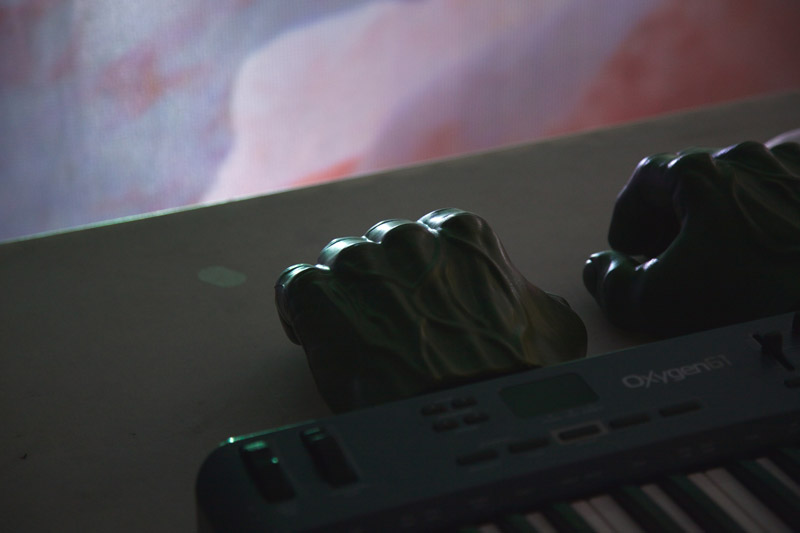
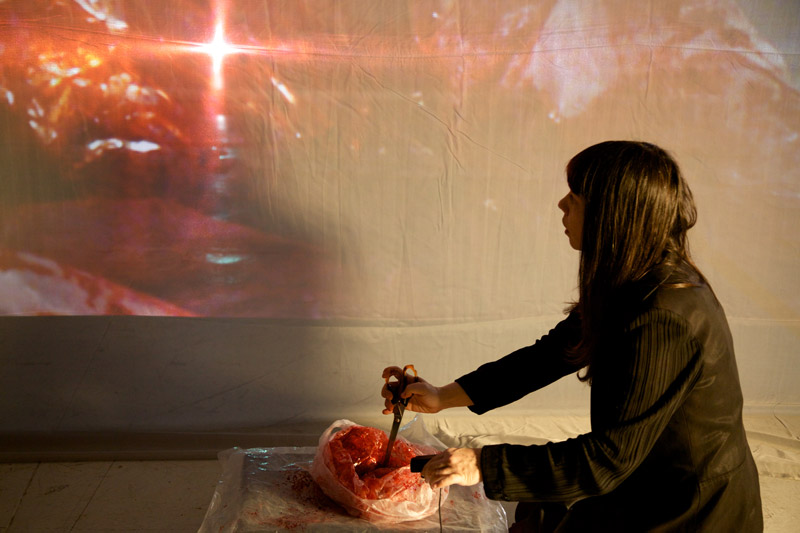
Théâtres is one of Olivier Pys first works, with autobiographical elements. The text comprises of twelve chapters, like a personal diary. The first scene starts with an act of violence; the knifing of a young person on a central road. As he is dying, he recalls the most important chapters of his life, he recalls the traumas which led him to become involved in the theatre and in writing.
Olivier Py, of French-Algerian nationality, puts forward the issue of violence in its many forms. From the dark side of the colonialism of the Algerian war to homophobia and street-violence in the big cities and domestic violence. Children who are raised in cities without ideals and orientation, who are looking for some meaning in a world without moral values. Children who, according to Py, could once again find meaning in the world through creation, through theatre.
The likeness and the gap from reality of the theatre brings about a sort of catharsis. Through this even the greatest suffering is brought to peace and wounds are healed. This text by Py is a manifesto against violence and bloodied power. It is a powerful statement, in opposition to the spirit of our times, with which the writer states that it is better to be a victim than a victimizer, to be tortured than a torturer, even if you have to offer up your wounds at the altar of stupidity and human brutality.
THOSE THEATRES
We set up theatres and scenes.But destiny always wins.And blows them and us away
George Seferis
Poet, playwright, writer, novelist, director, actor, singer, homosexual, left-wing, religious catholic; the fifty year old Olivier Py, current director of the Avignon Festival, has been involved in theatre since 1988. The same issues, thereabouts, intersect and haunt Pys universe: politics, Art, sex, faith, philosophy, family, in such a way that could only possibly be articulated by the Theatre.
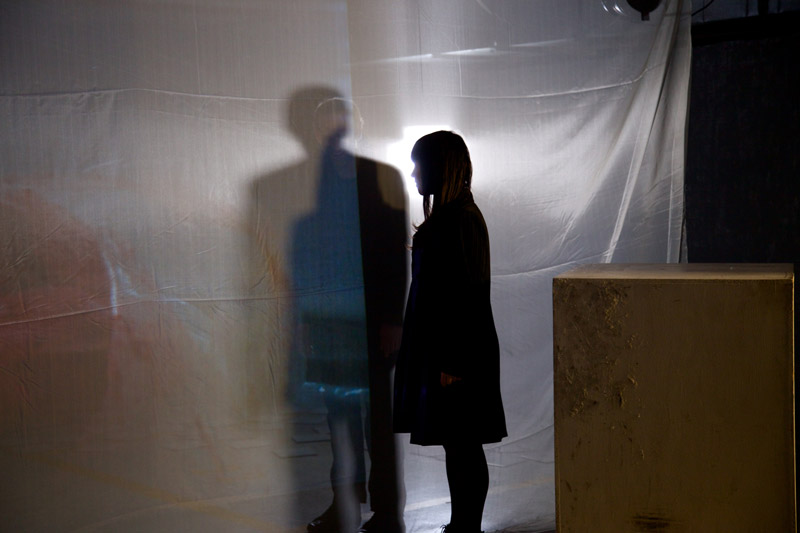
In the work Théâtres, which has many autobiographical elements, there are incidences which are impossible to recreate, however nothing is left unmentioned. Five people share the stage, passing from fiction to confession, from the theatrical proceedings to memory, from current affairs to mythology: Me, my Executioner, my Father, my Mother and the Goat. My Executioner is a village boy with the French flag tattooed on his shoulder. My Father, the murderer of a small poodle and dismemberer of a wild boar. My mother, absent and harsh, a vindictive townswoman. Me, a sometimes frightened, twisted boy, an abandoned child, a figment of the mind. The Goat is maybe the only figure which has any trace of humanity. This figure of self appears as a victim, one amongst so many already sacrificed: Dont ask me why I like to be beaten, dont ask me why I feel the need to be humiliated, it is the only way I have of saying that if I belong to a family of executioners, it is against my will! I never meant to be!
It despises the metaphors, the crystal clear expression of Madame de Chevigné, the silent fathers and the predatory mothers. It sings of the anonymous deaths and of the forgotten. It imagines itself knifed by a hooded youth, before it talks of repeated masochistic emotions, between a mother who is possessive, stingy, repulsive and a father worthy of contempt; he describes them as Arab-butchers. Half naked with a knife wound drawn on his side, half Apollo, half Christ, under the protection of a Goat from ancient tragedy, this Py-self appears as the torn conscience of the people.
Olivier Py. Writer, director and actor, Olivier Py was born in 1965. After his studies at the Ensatt Drama School, he joined the Conservatoire national supérieur dArt dramatique, in 1987, whilst at the same time studying theology. In 1988 his first play, entitled Des oranges et des onlges, was directed by Didier Lafaye. In the same year Olivier Py founded his own company. He made an impression at the Avignon Festival in 1995 by submitting La Servante, histoire sans fin, a series of works which lasts 24hours. In 1998 he was appointed to the management of the Centre dramatique national d Orléans and following that took over the management of the Odéon Théâtre de lEurope from 2001 to 2007.
In 2013 he is assigned the management of the Avignon Festival where he appeared many times, mainly in 2006, to direct L Énigme Vilar, a tribute to Jean Vilar in the Cour dhonneur du Palais des papes.
His texts are significant: most notably from Actes Sud Editions, the Paradis de tristesse (2002), Les Mille et Une Définitions du théâtre (2013), Siegfried, nocturne (2013) and the plays (amongst others): Epitre aux jeunes acteurs, Les enfants de Saturne, Les ballads de Miss Knife and Orlando ou lImpatience.
Direction Music: Violet Louise (Louisa Costoula)
Scenography Costumes: Nikos Anagnostopoulos
Lighting: Thomas Economakos
The creative team from the Visual and Sound Design (Studio 19, Aris Pavlidis)
Performers: Panagiotis Garmpis, Violet Louise (Louisa Costoula)
******
2nd Contemporary Theatre Festival
French Theatre à la Grecque
The French Institute of Athens – The Michael Cacoyannis Foundation
Theatre of speech, theatre of politics, theatre of memory, theatre of the soul.
The 2nd Contemporary Theatre Festival, French Theatre à la Grecque is here! The French Institute of Athens and the Michael Cacoyannis Foundation continue, for a second year running, in the organization of the event which was so warmly embraced by the theatre-loving public, this year presenting six new theatrical productions (one more than last year), using six contemporary French works, which have been especially translated into Greek and handed over to six talented Greek Directors of the younger generation, for their first presentation in this country.
Once again, contemporary French dramaturgy impresses with its richness, its controversial stance and its boldness. In the specially adapted underground area of the Michael Cacoyannis Foundation, from the 14th to the 31st of May 2015, artists of Greek theatre come face to face with works which are surprising and revealing and which talk of the void in love and the fantasy of escapism, the crisis-both social and economic -, domestic violence, homophobic discrimination, colonialism, power that is steeped in blood, and the values of theatre. Plays involving characters around the age of adolescence, who are always seeking an elsewhere paradise, or those who are older who, in either the half-light or the harsh light of the set, divulge inner secrets, guilt and dark pages of the story, in harsh dialogues heavy with humour, irony and cynicism.
With and without autobiographical hints, but most certainly with a multifaceted storyboard, the six works start up a dialogue between the past and the present; with the moral values and the torn public conscience, at the same time shedding light upon phenomena which constitute and very often define human temperament, as well as the people of today.
Six very different French writers: Carine Lacroix, with the work Burn baby burn, Simon Grangeat with T.I.N.A., Olivier Py with the work Théâtres, Pascal Rambert with Clôture de l’Amour, Enzo Cormann with Toujours lorage and Jean-Luc Lagarce with Juste la fin du monde, and six very different Greek directors: Vasia Attarian, Alexander Evkleidi, Louisa Costoula, K.Alexis Alatsis, Constantinos Hadjis and Enke Fezollari.
The works: Juste la fin du monde by Jean-Luc Lagarce, Toujours lorage by Enzo Cormann, Burn baby burn by Carine Lacroix, Clôture de l’Amour by Pascal Rambert, Théâtres by Olivier Py are available in print, in Greek from AGRA publications.
The programme of performances
14, 15, 16 may 2015, at 21:00
Burn Baby Burn
Carine Lacroix
Translation: Translation workshop of the French institute with the participation of: Simoni Athanasiou, Panagiotis Dry, Vicky Campouri and George Saramaskou. Direction and supervision of the translation: Dimitra Kondylaki
Direction: Vasia Attarian
17, 18, 19 May 2015, at 21:00
T.I.N.A., a short story about the crisis
Simon Grangeat
Translation: Effie Giannopoulou
Direction: Alexander Evkleidi
20, 21, 22 May 2015, at 21:00
Théâtres_Olivier Py
Translation: Maria Efstathiadi
Direction: Constantinos Hadjis
23, 24, 25 May 2015, at 21:00
Clôture de l’Amour
Pascal Rambert
Translation: Nicolitsa Aggelakopoulou
Direction: K. Alexis Alatsis
26, 27, 28 May 2015, at 21:00
Toujours lorage
Enzo Cormann
Translation: Maria Efstathiadi
Direction: Constantinos Hadjis
29, 30, 31 May 2015, at 21:00
Juste la fin du monde
Jean-Luc Lagarce
Translation: Andreas Staikos
Direction: Enke Fezollari
Performance photography: Aggelos Ballas
Photographs of the performance Toujours lorage: Georgia Leni, Aggelos Ballas
Photographs of the performance Juste la fin du monde: Venetia Venetiadi
Video: Michalis Roumpis (Direction), Andonis Kounellas (Director of photography), Aggelos Ballas (Editing)
A coproduction: The French Institute of Athens & The Michael Cacoyannis Foundation
In cooperation with: SACD & COPIE PRIVÉE
Information
2nd Contemporary Theatre Festival
French Theatre à la Grecque
The French Institute of Athens – The Michael Cacoyannis Foundation
20th, 21st, 22nd of May 2015, at 21:00
Théâtres Olivier Py
At the Michael Cacoyannis Foundation
Hall: specially adapted underground space
All performances commence at: 21:00
Ticket price: 10, general admission, per performance
